
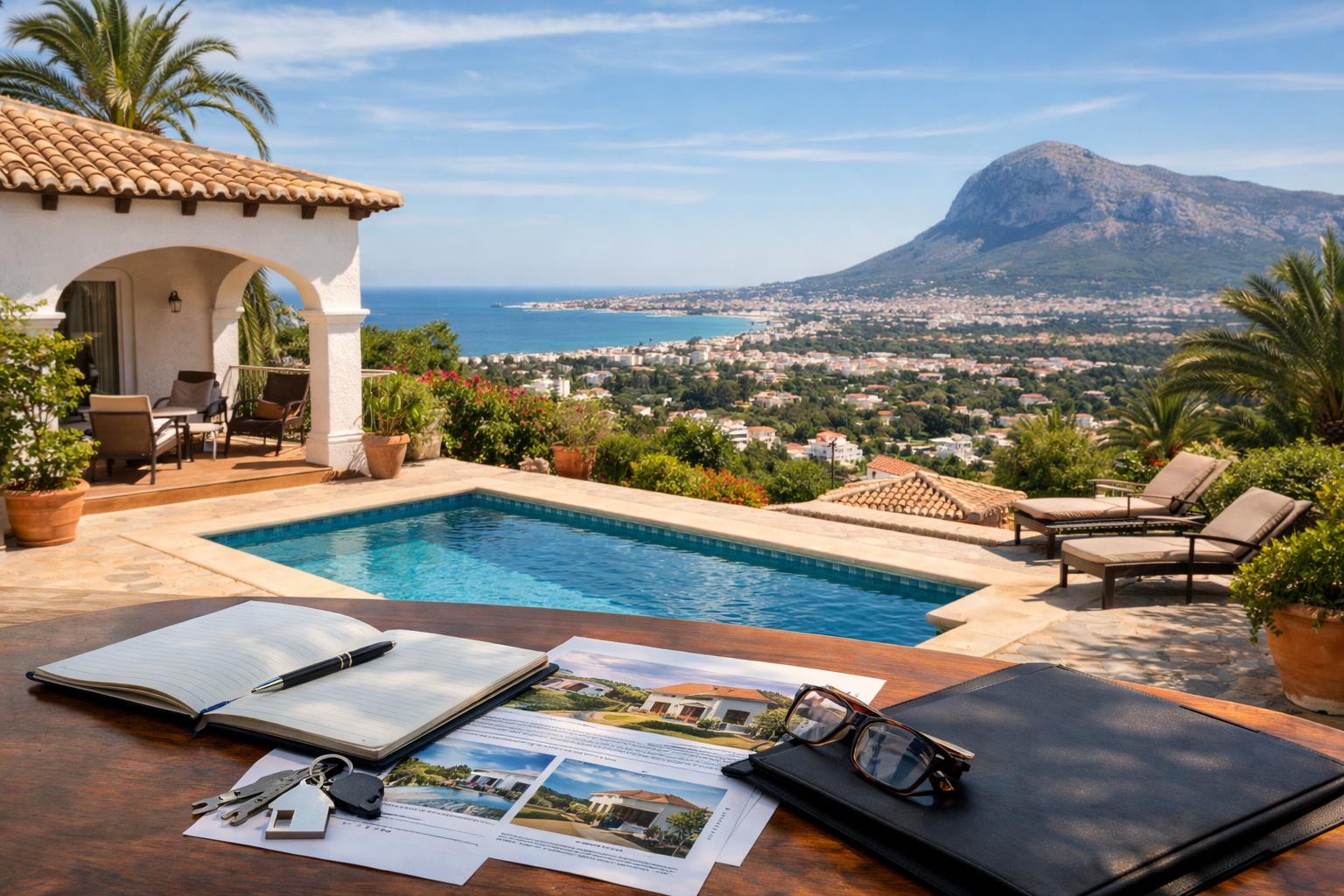
Buying a villa in Denia, Spain, can suit buyers looking for a Mediterranean base with a working town, beaches, a marina and year-round services rather than a purely seasonal resort. Denia sits on the northern Costa Blanca and has a varied property market, from hillside homes with sea views to detached villas in residential areas close to the beach or town centre. The right purchase is usually less about finding the largest house and more about matching the location, access, condition and legal status of a property to the way you intend to use it.
Start by defining what you need from a Denia villa
Before arranging viewings, decide whether the villa is intended as a permanent home, a holiday property, a future retirement base, an investment with occasional personal use, or a combination of these. Each purpose changes the practical priorities. For a practical comparison, explore SpainPortal’s La Sella Denia Villas For Sale.
A permanent home may need level access, reliable heating and cooling, good internet, parking, storage, nearby supermarkets and medical services. A holiday home may place more value on being walkable to the sea, low-maintenance outdoor space and the ability to lock up securely between visits. If you hope to rent the property, do not assume this will be possible: tourist rental rules, registration requirements, community rules and local restrictions can apply and may change. Obtain current advice before relying on rental income.
- Set a total budget, not just a property price budget.
- List essential features, such as a ground-floor bedroom, pool, garage, sea view or walking distance to amenities.
- Separate genuine requirements from preferences that you could compromise on.
- Consider how frequently you will use the house and who will look after it when you are away.
- Think ahead: will steep steps, a large garden or a remote position still work for you in several years?
Understanding Denia’s different villa locations
Denia has distinct areas, and two villas that appear close on a map can offer very different day-to-day experiences. Visit at different times of day where possible, particularly if traffic, noise, sun exposure or parking are important to you. Buyers considering related options may also find Villas For Sale Near Denia Spain useful.
Las Rotas and the southern coastal side
Las Rotas is known for its rocky coastline, coves, coastal walks and established residential character. Some homes are close to the sea, while others rise into the foothills of Montgó. Buyers should check the actual route to the waterfront, as a sea view does not necessarily mean easy beach access. Hillside plots can offer privacy and views but may involve steep driveways, steps and more demanding maintenance.
Las Marinas and the northern beach side
Las Marinas extends along the sandy beach side of Denia and includes a mixture of villas, apartments, holiday developments and year-round homes. It can appeal to buyers who want flatter terrain and proximity to wider beaches. However, the character changes along the coast, so inspect the immediate surroundings rather than relying on an area name alone. Check seasonal traffic, local services outside summer and the impact of nearby bars, campsites or busy roads. You can broaden your shortlist with the current Villas For Sale La Sella Denia.
Montgó and hillside residential areas
The slopes of Montgó are popular for detached villas, often with open views across Denia, the coast or surrounding countryside. Elevation can bring privacy and a sense of space, but it can also mean winding access roads, greater exposure to wind and a need for a car. Ask about drainage, retaining walls, access for tradespeople and emergency vehicles, and the practical cost of maintaining a sloping plot.
Town, port and village-edge settings
A villa closer to Denia town may make everyday life easier, with restaurants, shops, the port and services nearer at hand. Properties on the outskirts or towards smaller surrounding settlements may offer more land and a quieter setting, but check travel time in normal conditions and the availability of utilities. A peaceful rural-looking location may also have specific planning, access or infrastructure considerations that deserve careful review.
How to assess a villa during viewings
Try to view a serious contender more than once. The first visit is for overall suitability; later visits should be more methodical. If possible, see the property after rain, on a windy day or at a different time of year, although this is not always practical. A professional survey can identify issues that are not visible during a viewing, especially in older or altered homes.
Structure, water and outdoor areas
Look closely at roofs, terraces, external walls, pool surrounds, retaining walls and boundaries. Cracks may be superficial, but they may also need expert assessment. Signs of damp, staining, mould, peeling paint or water damage should be investigated rather than dismissed as cosmetic. In coastal settings, salt air can affect metalwork, shutters, outdoor fittings and pool equipment over time.
Ask how rainwater is managed across the plot and whether there has been any history of water ingress. Low-lying land, enclosed underbuilds and properties near watercourses can require particular attention. Do not rely solely on verbal assurances about flooding, drainage or insurance availability; obtain informed local and professional advice.
Services and comfort
Confirm the type and condition of electricity, water supply, drainage, internet connection, hot water system and air conditioning or heating. Villas may use systems that differ from those in your home country, and running costs can vary according to construction, insulation, occupancy and maintenance. If the house has a fireplace, gas installation, solar panels, a borehole, septic system or water tank, ask for service records and find out who is responsible for upkeep.
Check mobile signal and internet performance at the property if you plan to work remotely. Also consider sun orientation: a south-facing terrace may be attractive in winter, while shaded outdoor areas can be especially useful in the hottest months.
Access, parking and neighbours
Drive the route yourself. A narrow lane, sharp entrance or steep driveway can be more significant than it first appears, particularly for larger vehicles, deliveries or less confident drivers. Check whether parking is within the legal boundary, whether a garage is usable, and whether access is shared. It is sensible to ask about neighbouring construction, vacant plots, road noise, local festivities and any recurring issues with bins, parking or deliveries.
Check that the property matches its paperwork
This is one of the most important parts of buying a villa in Denia. Detached homes may have been extended, reconfigured or improved over many years. A guest annexe, enclosed terrace, pool house, basement conversion or extra bathroom may look established but still need to be checked against the relevant records and permissions.
Your independent Spanish lawyer should review ownership, the land registry position, cadastral information, planning status, building licences where relevant, occupancy documentation, debts or charges, community obligations and any rights of way or easements affecting the plot. They should also establish whether the seller has the right to sell and whether there are matters that must be resolved before completion.
Do not treat an estate listing, seller statement or previous utility bill as proof that all works are regularised. Documentation requirements can differ according to the property, its age, location and history. Current legal and planning advice is essential, particularly for villas with land, outbuildings or substantial alterations.
Budget for the full cost of ownership
The purchase price is only one element of buying a villa. Your budget should include applicable purchase taxes, legal fees, notary and registration costs, survey or technical inspections, mortgage-related costs where applicable, currency transfer costs and insurance. The amount and treatment of these costs depend on the transaction and can change, so ask qualified professionals for up-to-date, itemised estimates before committing.
After completion, plan for ongoing property costs. These may include local property-related taxes, waste charges, community fees if the home is within a development, utilities, internet, alarm monitoring, pool care, gardening, pest control, repairs and periodic servicing. A villa with a large garden or pool can be enjoyable, but it requires regular attention even when unoccupied.
- Request recent utility and maintenance information where available.
- Ask whether there are community rules, planned works or unpaid community charges.
- Obtain insurance quotations based on the actual property and location.
- Keep a contingency fund for repairs, upgrades and unexpected maintenance.
- If using finance, obtain advice on lending criteria, valuations and associated costs early.
Use the right professionals and keep the process independent
An independent, Spanish-qualified lawyer is central to a safe purchase. Choose someone who represents your interests, can explain the process clearly in a language you understand and is not simply acting for the seller. Depending on the property, you may also need an architect, surveyor or other technical professional to inspect construction, boundaries, installations or planning matters.
SpainPortal is a property search website and can help you research homes and locations, but it is not an estate agent, lawyer, tax adviser or mortgage adviser. Treat listing information as a starting point for enquiries and verification, not as a substitute for due diligence.
Tax, inheritance, ownership structure, mortgages and residency are areas where individual circumstances matter. Rules can change, especially for overseas owners and buyers from outside Spain. Speak to suitably qualified legal, tax and financial advisers before deciding who will own the property, how funds will be transferred or whether a purchase supports any residency plans.
Making an offer and progressing to completion
Once you have selected a villa, avoid rushing because of pressure from other interest or a deadline. Before paying any reservation amount or signing any document, have your lawyer review the terms and explain what happens if a condition is not met. The agreement should accurately identify the property, state what is included, set out payment arrangements and address relevant conditions and completion timing.
Items such as furniture, appliances, pool equipment, solar installations and air-conditioning units should be listed clearly if they are part of the deal. Carry out a final inspection shortly before completion to confirm the property is in the agreed condition, agreed items remain, and no new damage or occupation issue has arisen.
Buying a villa in Denia is most successful when you give as much attention to verification as to lifestyle. Take time to understand the micro-location, inspect the building and plot properly, and obtain independent professional advice before making binding commitments. That approach gives you the best chance of choosing a home that remains enjoyable and manageable long after the purchase is complete.