
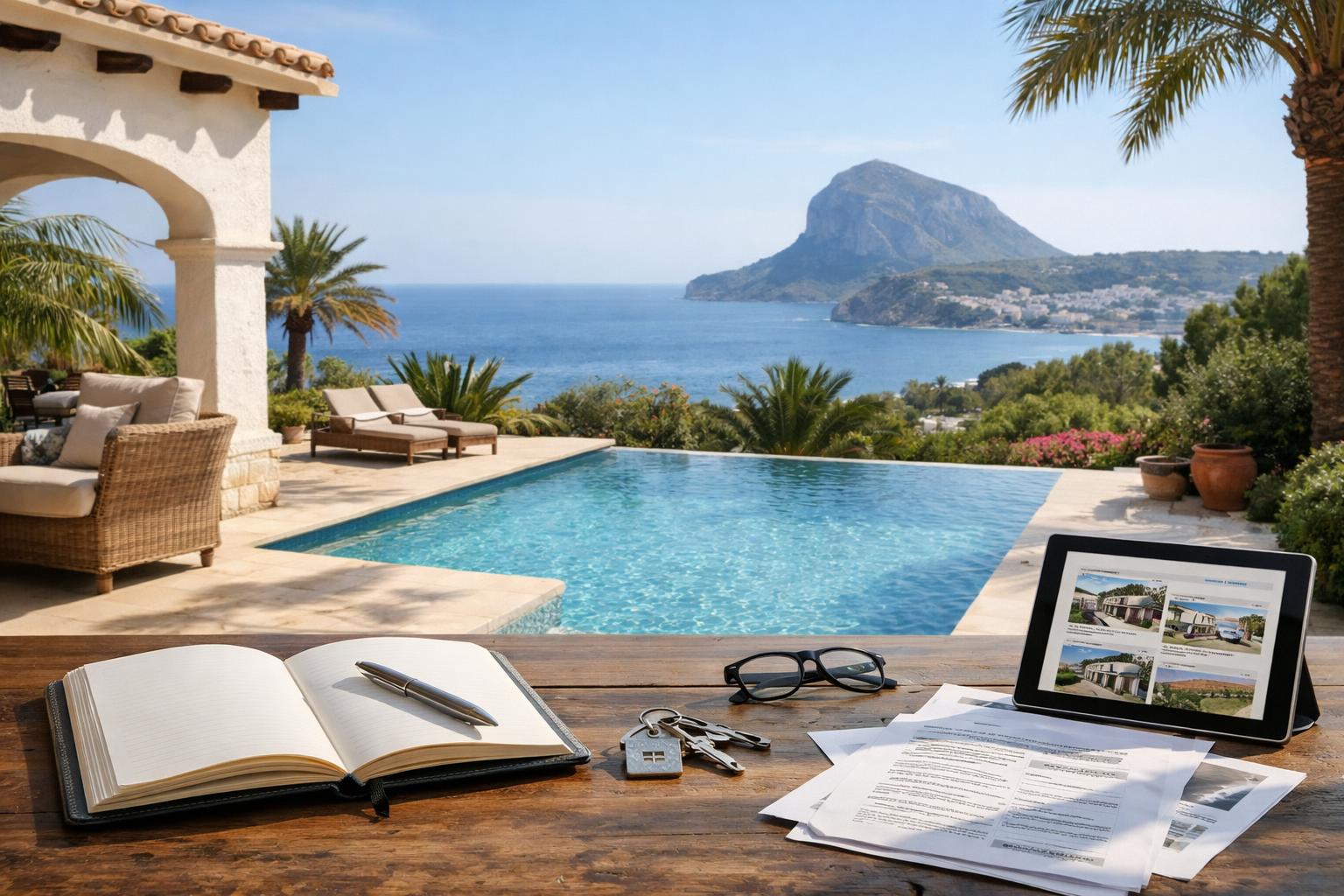
Buying a villa in Javea, Spain can be an attractive prospect for buyers looking for a Mediterranean home, a holiday base or a property for longer-term use. Javea (also known as Xàbia) offers a varied choice of settings, from established hillside villa neighbourhoods to homes closer to the old town, port and Arenal beach area. The right purchase is not simply about finding an appealing house: it depends on choosing a location that suits how you will use it, checking the condition and legal status of the building, and budgeting for the full cost of ownership. This guide sets out the practical points international buyers should consider before making an offer.
Start by defining what your Javea villa needs to do
Before comparing listings, be clear about your priorities. A villa used for several family holidays each year may need different features from a home intended for year-round living. For example, a buyer planning extended winter stays may place more importance on heating, insulation, orientation, internet provision and proximity to everyday services. A buyer focused on summer use may prioritise outdoor space, a pool, parking and access to beaches or restaurants. For a practical comparison, explore SpainPortal’s Villas For Sale In Javea With Sea Views.
Write down your non-negotiables and preferences separately. This helps prevent an attractive view, recently renovated kitchen or large terrace from distracting you from more important requirements.
- Decide whether you want to be within walking distance of amenities or are comfortable relying on a car.
- Consider the number of bedrooms and bathrooms needed now, as well as for visiting family or guests.
- Think about accessibility, including steps, steep driveways, internal staircases and the route from parking to the entrance.
- Set a realistic budget for purchase costs, furnishing, repairs, running costs and contingency work, not just the advertised asking price.
- Consider whether you need a lock-up-and-leave home or are prepared to manage a larger garden, pool and plot.
Choosing an area in Javea
Javea is not one uniform market. Travel times, terrain, views, plot sizes, noise levels and access to services can differ substantially between neighbourhoods. Visiting at different times of day is particularly valuable: a quiet road in the morning may feel very different in the evening, during the summer season or after rain. Buyers considering related options may also find Villas To Rent In Javea useful.
The Old Town and central areas
The historic centre can appeal to buyers who value character, local shops and a more traditional town environment. Villas may be less common than apartments or townhouses in the most central streets, but nearby residential areas can offer more space while retaining relatively convenient access to daily facilities. Check parking arrangements carefully, especially if you expect regular visitors or prefer not to park on the street.
The Port and coastal neighbourhoods
Areas around the port can suit buyers who want restaurants, the seafront and services nearby. Properties closer to active coastal areas may offer convenience but can also involve more passing activity, limited parking or smaller plots than hillside locations. If proximity to the sea is important, inspect the immediate surroundings rather than relying on a description such as “near the beach”. You can broaden your shortlist with the current Javea Luxury Villas.
Arenal and surrounding residential areas
The Arenal area is known for its sandy beach and seasonal activity. Nearby villas can be convenient for buyers who want access to leisure facilities and a livelier summer atmosphere. Assess whether the property is close enough to enjoy the area on foot but sufficiently removed from traffic, entertainment noise or busy pedestrian routes for your own preferences.
Hillside and outlying villa zones
Neighbourhoods on the slopes around Javea often attract buyers seeking privacy, open views and larger plots. These benefits can come with practical considerations. Roads may be narrow or steep, some homes may be a considerable drive from shops, and a south- or west-facing terrace may receive intense sun. Check vehicle access, turning space, drainage, slope stability, mobile signal and how the property feels in windy or wet conditions. A view is valuable only if the home also works comfortably day to day.
Inspect the villa beyond the presentation
Photographs and viewings can show the appealing side of a property, but a careful buyer should investigate the less visible details. Villas in coastal Spain can vary widely in age, construction method, maintenance history and quality of later alterations. Do not assume that a renovated appearance means all systems have been upgraded or that an older property necessarily has problems; ask for evidence and arrange appropriate professional inspections.
Building condition and maintenance
During viewings, look at the condition of the roof, external walls, terraces, drainage points, windows, shutters and boundary walls. Ask about the age and servicing of the pool equipment, air conditioning, heating, hot-water system and any solar installation. Signs of damp, cracking, water staining or uneven surfaces deserve further investigation by a qualified surveyor or relevant technical professional.
Outdoor areas require particular attention. Check the pool surround for damage or slippery surfaces, examine retaining walls, and ask how gardens are irrigated and maintained. Mature planting can be appealing but may require ongoing work. If the plot borders undeveloped land, ask what is known about its status, access rights and any foreseeable development proposals; your independent adviser can help verify matters that affect the property.
Layout, orientation and comfort
Try to view a villa with everyday use in mind. Is there sufficient shaded outdoor space? Are the principal rooms excessively exposed to afternoon sun? Does the kitchen connect well with the terrace? Are guest bedrooms private enough? Is storage adequate for luggage, bicycles, garden equipment and pool furniture? Where possible, visit at more than one time of day to understand light, road noise and neighbouring activity.
Ask how the property performs outside the peak summer months. Heating, insulation, ventilation and window quality can make a meaningful difference to comfort. If you plan to work remotely, test or investigate the available internet connection rather than assuming it will meet your needs.
Check documents and legal status before committing
Property due diligence is essential when buying a villa in Javea. An independent Spanish lawyer experienced in property transactions should review the documentation and explain it in a language you understand. SpainPortal can help you search and compare properties, but it is not an estate agent, legal adviser or substitute for independent professional advice.
Your lawyer should carry out the relevant checks for the specific property. Depending on the circumstances, these commonly include confirming ownership, reviewing registered charges, checking planning and building documentation, comparing the property’s legal description with its physical reality, and investigating whether extensions, pools, terraces or other works have the necessary status. They can also check local charges, community obligations where applicable, and whether there are issues affecting access or services.
It is especially important to query alterations that are not clearly reflected in the documents. A converted garage, enclosed terrace, guest accommodation or additional bathroom may be useful features, but they should be properly investigated. Never rely solely on a verbal explanation that paperwork will be resolved later.
Understand the purchase process and your costs
The exact process depends on the property, seller, financing and professional advice, but it usually involves an offer, negotiations, documentary checks and formal completion before a Spanish notary. A reservation payment or deposit may be requested at an early stage. Do not transfer money or sign documents without understanding the terms, the circumstances in which funds may be retained or returned, and the checks that remain outstanding. Your independent lawyer should advise before you take a binding step.
Your budget should include more than the agreed property price. Buyers may face taxes, notarial and registration costs, legal fees, valuation or survey fees, mortgage-related costs where finance is used, insurance and the cost of connecting, updating or maintaining services. Ongoing ownership can include local property-related charges, utilities, pool and garden care, repairs, security and community fees if the villa forms part of a development.
Tax rules, fees and purchase procedures can change and may differ according to the property and buyer’s circumstances. Obtain current advice from an independent Spanish lawyer and tax professional before committing to a purchase. If you are using finance, speak with a lender or mortgage broker early, as lending criteria, documentation requirements and exchange-rate considerations may affect your plans.
Plan for ownership after completion
Buying the right villa also means planning how it will be looked after. If you will not live in Javea full time, decide who will inspect the property, respond to leaks or alarms, maintain the pool and garden, and coordinate tradespeople. Obtain clear written terms from any property-management provider and understand what is included.
If you are considering holiday letting, do not assume it is automatically permitted or commercially suitable. Requirements may apply at regional, local, community and property level, and these can change. Take current legal and tax advice before basing your purchase decision on rental income. Similarly, residency, visa and tax residence matters depend on personal circumstances and changing rules, so specialist advice is important.
Questions to ask before making an offer
- Why is the owner selling, and how long has the villa been on the market?
- What work has been carried out, by whom, and are invoices, warranties or permissions available?
- Which furnishings, appliances and outdoor equipment are included?
- How are the pool, garden, heating and air conditioning maintained?
- Are there any known issues with water pressure, drainage, access, parking, internet or neighbours?
- Is the property subject to community rules, and are there planned works or outstanding payments?
- Can the seller provide the documents needed for your lawyer’s review?
Buying a villa in Javea, Spain is easier when you combine a focused property search with careful viewing, independent technical checks and professional legal and tax advice. Take time to compare locations and assess the whole ownership picture. A villa that fits your intended lifestyle, budget and practical requirements is more likely to remain a satisfying purchase long after completion.