
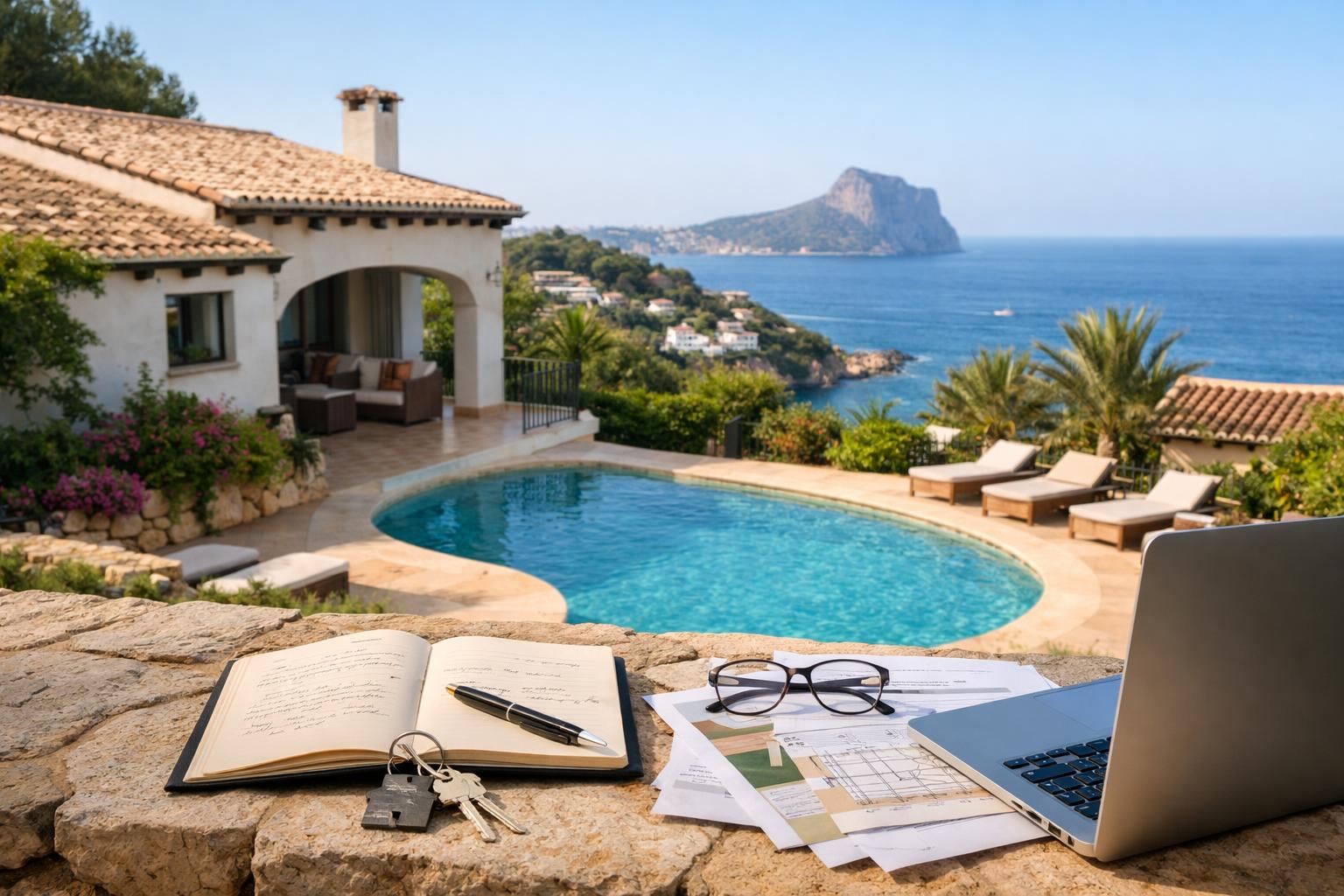
Buying a villa in Moraira, Spain, can be an appealing option for buyers looking for a Mediterranean home for holidays, retirement, family use or longer stays. However, the right purchase is not simply the property with the best photographs. In and around Moraira, differences in plot position, access, local amenities, licensing, maintenance needs and paperwork can have a major effect on how enjoyable and manageable a villa is to own. This guide explains how international buyers can approach the search with practical questions and sensible checks.
Understand Moraira and its surrounding neighbourhoods
Moraira is on the Costa Blanca in the municipality of Teulada. Property marketed as being in Moraira may be close to the town centre, in a coastal urbanisation, inland towards Teulada, or in a neighbouring area. The description “Moraira” can therefore cover locations with very different surroundings and day-to-day convenience. For a practical comparison, explore SpainPortal’s Moraira El Portet Villas For Sale.
Start by deciding what you want from the location rather than searching only by postcode or broad map area. A villa near the centre may suit buyers who want to walk to restaurants, the beach, shops and the marina. A home in a quieter hillside setting may offer privacy and wider views, but could require a car for almost every journey. Coastal properties can be particularly attractive, while plots further inland may offer more space or a different sense of neighbourhood.
Questions to ask about the setting
- Can you comfortably reach the facilities you expect to use throughout the year?
- Is the road to the house easy to use, including at night and in wet weather?
- Is there sufficient off-street parking, turning space and practical access for guests?
- What is immediately around the plot: established homes, open land, commercial activity or undeveloped sites?
- Does the property feel different at busy times, during the evening or outside the main holiday season?
- Are there steps, steep slopes or narrow entrances that could become inconvenient over time?
Visit shortlisted locations more than once where possible. A daytime viewing can reveal views and layout, but an evening or weekend visit may give a better impression of traffic, noise, parking, lighting and the general atmosphere. If you intend to use the villa in winter, see the area at that time too rather than relying on a summer impression. Buyers considering related options may also find Luxury Villas For Sale In Moraira useful.
Define the villa you actually need
Before arranging viewings, make a written brief divided into essentials, preferences and deal-breakers. This will help you avoid being drawn towards a visually impressive property that is unsuitable for the way you intend to live.
For many buyers, the important distinction is between a low-maintenance holiday villa and a larger home intended for regular or permanent use. A lock-up-and-leave property may benefit from a manageable garden, straightforward access and modern systems. A family villa might need separate guest accommodation, a flexible living layout, storage, shaded outdoor areas and enough parking. Buyers planning later-life use often place more emphasis on bedroom and bathroom accessibility, shallow steps and easy access to services. You can broaden your shortlist with the current Bargain Villas For Sale In Moraira.
Features worth assessing carefully
- Orientation: Consider sun exposure at different times of day, shade on terraces and whether indoor spaces will be comfortable in both warmer and cooler months.
- Outdoor living: Check the relationship between the kitchen, living space, terraces, pool and garden. A large exterior area is not always easy to use.
- Pool: Ask about its age, condition, equipment, cover, surrounding surfaces and ongoing care requirements.
- Building condition: Look beyond décor for signs of damp, cracking, drainage issues, roof condition, window quality and the state of retaining walls.
- Utilities and systems: Establish how water, electricity, drainage, internet, heating, cooling and hot water are supplied and maintained.
- Storage: Consider room for outdoor furniture, bicycles, tools, suitcases and pool equipment, particularly if the house will be used by several people.
A renovated villa can be a convenient choice, but ask what work was done, when it was completed and whether supporting paperwork is available. With an older villa, obtain an informed view of likely repair or modernisation work before committing. Cosmetic presentation should not substitute for an independent technical inspection.
Search and compare properties methodically
Use property listings to build a realistic picture of the market, but treat listing details as a starting point for investigation. Floor areas, plot boundaries, views, bedroom counts and descriptions of proximity should all be checked during the viewing and due-diligence process.
Create a comparison sheet for every serious contender. Record not only the headline features, but also practical observations: road noise, privacy, natural light, stairs, neighbouring windows, parking, plot gradient, signs of maintenance and any questions that remain unanswered. Photographs taken with permission and a simple plan of each house can make later comparisons far easier.
It is sensible to view enough homes to understand the trade-offs in your preferred area. A central location, expansive plot, recent refurbishment, open view and easy access may not all be available in one property. Knowing which compromises you can accept helps you act more confidently when a suitable villa appears.
Carry out thorough legal and technical due diligence
Do not assume that a villa is fully compliant because it has been occupied, renovated or offered for sale. Before signing binding documents or transferring significant funds, appoint an independent Spanish lawyer who acts for you and is experienced in property transactions involving international buyers. They can investigate the title, ownership, registered description, outstanding charges, planning and occupation documentation, and other matters relevant to the particular home.
Your lawyer should explain the documents and process in a language you understand. If a document differs from the property you viewed, for example in the stated size, layout, land, outbuildings, pool or guest accommodation, ask for a clear explanation and written advice before moving forward.
Due-diligence points to raise with your adviser
- Whether the seller has the right to sell and whether the title records match the property.
- Whether there are mortgages, charges, debts, rights of way or other burdens affecting the home.
- Whether the building, extensions, pool, terraces and any separate accommodation have the necessary permissions and documentation.
- Whether the property has the appropriate licences or certificates required for occupation, where applicable.
- Whether there are community rules, fees or shared obligations if the villa is within an urbanisation or community arrangement.
- Whether there are unpaid local charges, utility bills or community debts that need to be addressed at completion.
- Whether your intended use, including renovation or holiday letting, is permitted.
Commissioning an independent surveyor or qualified technical professional is also strongly advisable, especially for older homes, hillside plots and properties with extensive alterations. They can assess visible defects and identify questions requiring further investigation. A survey is not a replacement for legal checks; the two processes serve different purposes.
Plan the full cost of ownership, not just the purchase
Your budget should include the purchase price as well as transaction costs, professional fees, taxes, insurance, utilities, furnishings, repairs and ongoing maintenance. The precise taxes and costs depend on factors such as the property, buyer circumstances and current regulations. Tax and legal rules can change, so obtain current advice from an appropriately qualified Spanish lawyer, tax adviser and, where relevant, mortgage adviser before budgeting or proceeding.
For a villa, recurring costs can be significant and vary widely. Ask for recent information about local property-related charges, community payments if applicable, insurance, garden care, pool servicing, security, utility use and any maintenance contracts. If the home is vacant for extended periods, factor in keyholding, periodic inspections and emergency contact arrangements.
If you require finance, explore your options early. Lending criteria, documentation requirements, valuations, deposits, currency arrangements and affordability assessments can affect the timing and structure of a purchase. A mortgage is not assured simply because a property is found, and current independent mortgage advice is important before making commitments.
Make an offer with clear conditions and records
When you are ready to negotiate, ensure your offer is clear about what is included. This may cover furniture, appliances, lighting, garden equipment, pool equipment, parking or storage areas. Verbal assurances can be forgotten or misunderstood, particularly where several languages are involved, so important points should be recorded in the appropriate documentation.
Do not pay a reservation amount or deposit until you understand the proposed terms, who will hold the funds, what happens if a legal or technical issue is found, and the circumstances in which money may or may not be returned. Your independent lawyer should review the relevant agreement before you sign. Avoid pressure to waive checks merely to move quickly.
Before completion, arrange a final visit where possible. Confirm that the property remains in the agreed condition, included items are present, and no new issues are apparent. Make practical arrangements for meter readings, keys, alarm codes, manuals, service contacts and insurance from the point at which you become responsible for the property.
Consider residency, letting and renovation separately
Buying a villa and having the right to live in Spain are separate matters. Residency and immigration arrangements depend on nationality, personal circumstances and current rules. If you plan to spend substantial time in Spain, seek up-to-date advice from a qualified immigration or legal professional rather than relying on general guidance.
Likewise, do not assume a villa can be used for holiday rentals because it has a pool, separate accommodation or a desirable location. Licensing, registration, community restrictions, planning considerations and tax obligations may apply, and rules can change. Obtain specific professional advice before basing your purchase decision or finances on rental income.
For renovation, establish what you want to change before committing. Extensions, structural alterations, terraces, pools, boundary work and changes to ancillary spaces may require permissions or technical documentation. A local architect, surveyor or other suitably qualified professional can advise on the feasibility of your plans alongside your lawyer’s legal checks.
A sensible route to buying a villa in Moraira
Buying a Villa in Moraira, Spain, is most successful when you balance lifestyle preferences with careful verification. Narrow your preferred locations, view homes at different times, investigate the condition of the building and plot, and use independent professionals before signing or paying funds. SpainPortal can help you search and compare available property, but it is not an estate agent or legal adviser. A measured search and current professional advice will put you in a stronger position to choose a villa that works both on viewing day and in everyday ownership.