
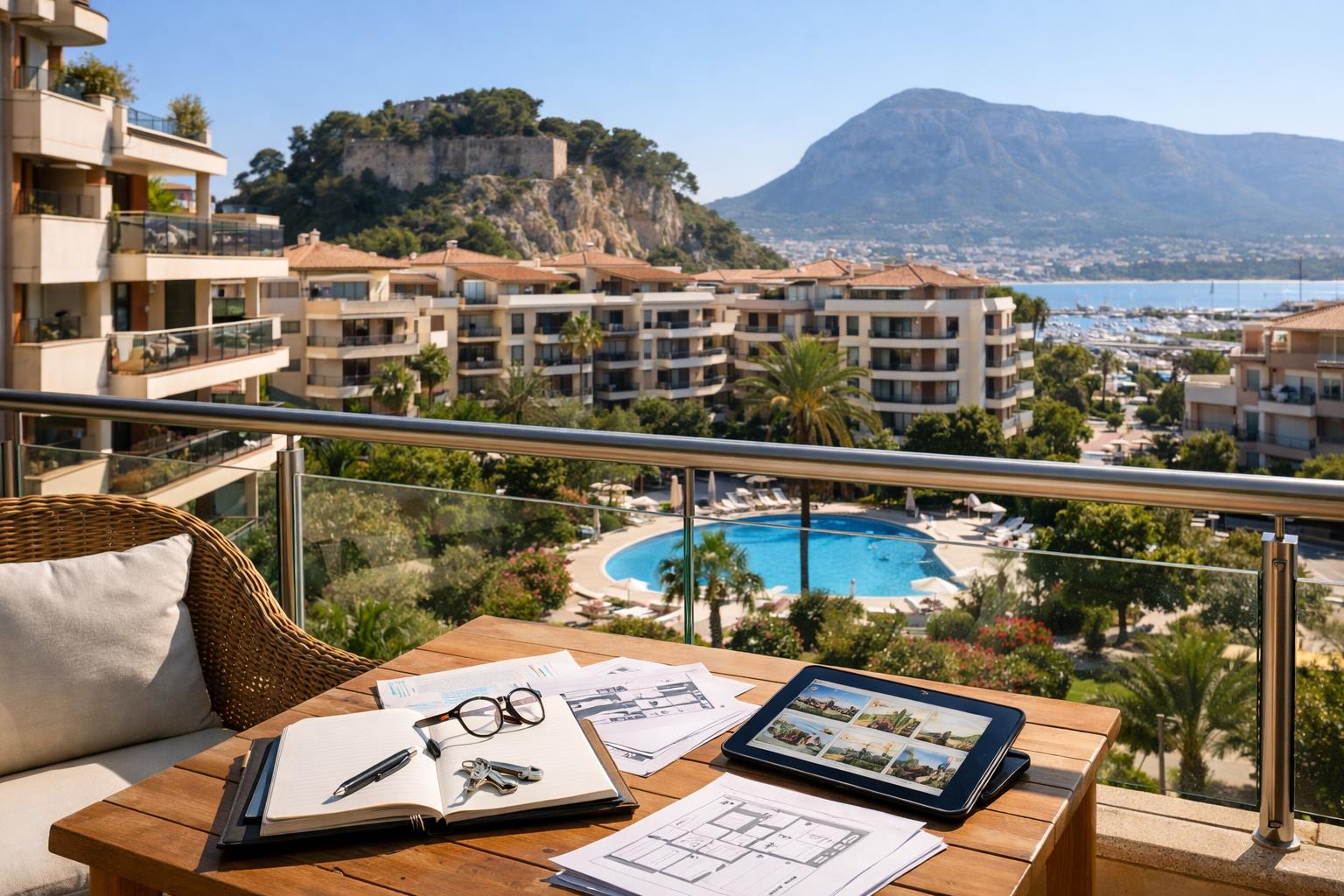
Finding apartments in Denia, Spain, is about more than choosing a property close to the beach. Denia offers a working town, marina, historic centre, long stretches of coastline and residential districts with very different year-round characters. For an international buyer, the best apartment will depend on how you intend to use it, how often you will be in Spain, whether you need to walk to amenities, and how comfortable you are with the running costs and responsibilities of a shared building.
Start with how you will use the apartment
Before searching, set out your priorities in practical terms. A holiday base, a permanent home, a rental investment and a future retirement property can call for different locations and building types. Being clear at the outset makes it easier to dismiss attractive-looking listings that do not meet your real needs. For a practical comparison, explore SpainPortal’s La Sella Denia Villas For Sale.
- For regular holidays: consider ease of arrival, proximity to the beach or marina, outdoor space, secure parking and whether the apartment can be left empty for periods.
- For year-round living: focus on supermarkets, medical services, public transport, heating or cooling, lift access, storage and a neighbourhood that remains active outside the main holiday season.
- For occasional rental use: investigate the building rules, local requirements and whether the property is eligible for the intended use before relying on any projected income.
- For later-life planning: assess step-free access from the street, lift reliability, shower access, parking, local services and the practical layout of the flat.
Make a list of essentials and preferences. Essentials might include two bedrooms, a lift, a certain walking distance to facilities, or a communal pool. Preferences may include sea views, a particular floor or a recently updated kitchen. This distinction helps you negotiate and avoids stretching your budget for features that will not materially improve your use of the home.
Understand Denia’s main apartment areas
Denia is not a single uniform market. Conditions can change noticeably between the centre, the port, coastal developments and neighbourhoods further inland. Visit each area at different times of day if possible, rather than making a decision from photographs or a short daytime viewing. Buyers considering related options may also find Villas For Sale Near Denia Spain useful.
Town centre and historic streets
Central Denia may suit buyers who value shops, restaurants, markets and everyday life on the doorstep. Apartments here can range from older flats in established blocks to refurbished homes in traditional buildings. Check access carefully: narrow streets, restricted vehicle access, noise from hospitality businesses and limited private parking can matter more than they first appear. In older buildings, ask about the condition of communal stairs, roofs, façades, plumbing and any planned works.
The port and marina area
The port and marina can appeal to buyers who want a waterfront setting, dining options and access to ferries or boating facilities. These areas can be lively, particularly at certain times of year. Look beyond the view and assess traffic, delivery activity, nearby nightlife, parking arrangements and how exposed the apartment is to wind, salt air and marine humidity. A good view is valuable only if the building and glazing also provide the comfort you expect. You can broaden your shortlist with the current Villas For Sale La Sella Denia.
Beachside districts and coastal developments
Denia’s coastline includes apartment developments near sandy beaches and other coastal settings with a different feel. These homes often attract buyers looking for terraces, pools and a more holiday-oriented environment. Establish whether local amenities remain convenient when visitor numbers are lower. You should also inspect external maintenance closely, as pools, landscaped grounds, lifts, garages and shared infrastructure create ongoing community responsibilities.
Residential areas away from the centre
Properties set back from the busiest central areas can offer more space, quieter surroundings or easier parking. However, an apparently short route on a map may be less convenient in summer heat, on hills or when carrying shopping. Test the journey to the places you expect to use regularly. If you will not keep a car in Spain, confirm transport options rather than assuming that a coastal location is walkable in daily life.
Search listings with the building in mind
An apartment purchase includes a share in a building and, often, shared grounds. The flat itself may be appealing while the wider development is poorly managed, expensive to maintain or subject to disagreement. When comparing listings, record facts in a consistent format rather than relying on headline descriptions.
- Internal layout, usable outdoor space and orientation.
- Floor level, lift access and stair access if the lift is unavailable.
- Private parking, storage rooms and whether they are properly included in the property documentation.
- Pool, gardens, concierge services, sports facilities or other communal elements.
- Age and apparent condition of the block, including windows, balconies, roofs and common areas.
- Air conditioning, heating, ventilation and the likely comfort of the apartment throughout the year.
- Noise sources, overlooking, road access and the outlook from rooms you will use most.
SpainPortal can be used to compare available properties and narrow a search by features that matter to you. Treat listing information as a useful starting point, then verify key details through viewings, documents and independent professional checks. Floor areas, boundaries, views, furniture, licences and included parking should not be assumed solely from marketing material.
How to inspect an apartment properly
Allow enough time for a viewing to examine the details that photographs hide. If you are travelling to Denia for a concentrated viewing trip, schedule a second visit for any property that remains a serious contender. A return at a different time can reveal traffic, sun exposure, neighbouring activity and noise levels.
Inside the property
Open and close windows, shutters, doors and cupboards. Look for signs of damp around external walls, ceilings, bathrooms and terrace doors. Ask when air-conditioning equipment, water heaters and kitchen appliances were installed and whether they work as expected. In a furnished sale, request a written inventory of what is included; do not assume that the furniture shown during the viewing will remain.
Check the practicalities as well as the presentation. Is there enough storage for beach equipment or longer stays? Is the terrace overlooked? Can the bedrooms be darkened and ventilated? Where are bins kept? Does the Wi-Fi or mobile signal meet your likely needs? In a holiday-focused development, consider whether neighbouring apartments may be occupied differently at peak periods.
Outside and in communal areas
Walk through the entrance, corridors, lift, garage, pool area and any gardens. Notice cleanliness, lighting, drainage, accessibility and visible wear. Look up at balconies and façades for cracking, staining or unfinished repairs. If parking is important, physically access the space: a space can be awkward to enter, unsuitable for a larger vehicle or separate from the flat in a way that affects convenience.
Ask whether any works have been discussed or approved, such as lift repairs, façade work, roof renewal, waterproofing or upgrades to communal systems. Major works can affect both the enjoyment and the overall cost of ownership.
Review the owners’ community carefully
Many Denia apartments form part of a community of owners. The community is responsible for shared elements and will usually collect contributions towards common expenses. This is one of the most important areas for an overseas buyer to understand before making a binding commitment.
Request available community documentation and have it reviewed where appropriate. Useful questions include:
- What regular community charges apply, what do they cover and how are they paid?
- Are there outstanding debts linked to the property or expected special contributions?
- What do recent meeting minutes show about repairs, disputes, noise, pets, holiday lettings or use of facilities?
- Is there a reserve for maintenance, and are significant works anticipated?
- Are there restrictions that affect your plans for pets, alterations, renting or use of communal areas?
- Who manages the community, and how are owners informed of meetings and decisions?
Community rules and financial arrangements need individual review. Your independent legal adviser can help obtain and assess the relevant documents, including confirmation of the seller’s position regarding community payments.
Budget for the full purchase and ownership picture
The asking price is only one part of the commitment. Buyers should prepare a separate contingency for acquisition costs, professional fees, taxes, registration-related costs, finance costs where relevant, moving, furnishing, insurance, utility setup and initial repairs. The exact amounts and applicable taxes depend on the property, transaction structure, buyer circumstances and current rules. Obtain current advice from qualified Spanish legal and tax professionals before setting a final budget.
For ongoing ownership, ask for recent utility bills where available, details of community charges, insurance information and evidence of any service contracts. Consider management costs if the apartment will be empty for long periods. Salt air, strong sun, terrace drainage, air-conditioning and shared pools can all make proactive maintenance especially worthwhile in coastal homes.
Use independent professional advice before you commit
Buying in another country should involve independent advice, even when the seller or an intermediary appears helpful. Appoint a Spanish lawyer who acts for you, communicates clearly in a language you understand and can explain the transaction before you sign or transfer funds. The lawyer should carry out the appropriate legal and documentary checks for your proposed purchase, including ownership, charges, planning or property status where relevant, and the terms of any reservation or deposit agreement.
If you are using mortgage finance, speak to lenders or a suitably qualified mortgage professional early. Lending criteria, valuations, documentation requirements, foreign-currency considerations and affordability assessments can change. Do not make a purchase decision on the assumption that finance will be available until you have received current, personalised information.
Tax, residency, inheritance and rental questions are also personal matters. Spanish rules and the rules in your home country may both be relevant, and they can change. Seek current advice from appropriately qualified legal, tax and financial professionals before acting, particularly if you plan to let the apartment, become resident in Spain or own jointly with family members.
A practical viewing-trip checklist
- Bring identification and keep a written record of every property viewed.
- Take notes on sunlight, noise, parking, walking routes and mobile coverage.
- Ask for the exact address or clear location, floor, orientation and details of included items.
- Request available community information and details of known works.
- Revisit leading options at another time, ideally including an evening or busier period.
- Do not feel pressured to sign a reservation document without understanding its terms and consequences.
- Build time into your trip to explore the surrounding area as a resident would, not only as a visitor.
Finding apartments in Denia, Spain, becomes more manageable when you compare lifestyle, building quality and ownership obligations together. A disciplined shortlist, thorough viewings and independent professional checks give you a stronger basis for choosing an apartment that works in everyday use as well as in the listing photographs.