
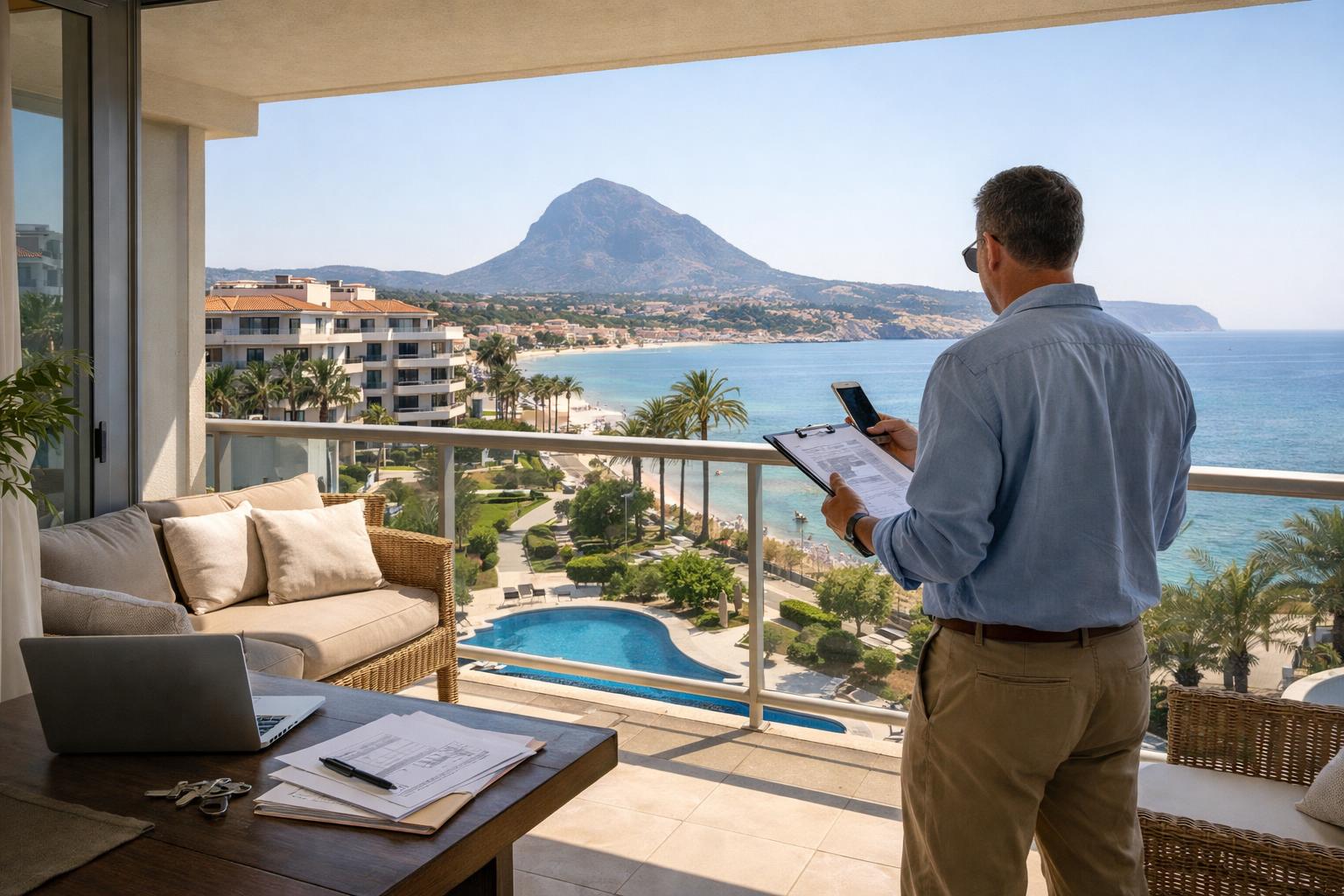
Finding apartments in Javea, Spain, involves more than choosing between a sea view and a central address. Javea, also known locally as Xàbia, has several distinct neighbourhoods, a varied mix of older and newer apartment buildings, and a strong seasonal rhythm. International buyers will usually get better results by defining how they intend to use the property, comparing the immediate surroundings as carefully as the apartment itself, and allowing time for independent legal and technical checks before committing.
Start with the purpose of your apartment purchase
Your priorities should reflect the way you expect to use the apartment. A holiday base, a permanent home, a future retirement property and an investment used for occasional rentals can all lead to different location and building choices. For a practical comparison, explore SpainPortal’s Javea Apartments.
- For holidays: proximity to the beach, restaurants, shops and easy lock-up-and-leave maintenance may matter most.
- For year-round living: consider winter sun, insulation, heating, supermarket access, parking, medical services and whether the area remains convenient outside the busiest months.
- For accessibility: check the route from parking to the property, lift dimensions, steps at the entrance, shower access and the practical layout of balconies and communal areas.
- For rental potential: distinguish between a property that is appealing to visitors and one that can lawfully and practically be let. Local and regional rules, community restrictions and licensing requirements can change, so obtain current professional advice before relying on rental income.
Prepare a short non-negotiable list before searching. It might include two bedrooms, a lift, private parking, outdoor space, air conditioning, walking access to amenities, or a maximum level of community responsibility. This helps prevent a beautiful view from distracting you from a feature that will affect daily life.
Understand Javea’s main apartment areas
Javea is often described through three broad zones: the historic Old Town, the Port and the Arenal beach area. There are also residential areas between and beyond these centres. Each has a different atmosphere, so viewing at more than one time of day is particularly valuable. Buyers considering related options may also find Finca For Sale Javea useful.
Arenal and the beachside area
The Arenal is the best-known sandy beach area and is popular with buyers seeking a walkable holiday setting. Apartments here can place you close to the promenade, cafés, restaurants and beach facilities. However, a property close to the centre of activity may experience more pedestrian movement, road noise or seasonal bustle than one set a few streets back. Check how far the actual walk is from the building rather than relying on a map pin, especially if gradients, busy roads or limited crossings could matter.
Look closely at the orientation of terraces. A sea-facing terrace may be attractive, but a west-facing or enclosed balcony can become very warm at certain times of year. Equally, a shaded apartment may feel cooler in summer but need more consideration in winter. Visit with windows open and closed to judge traffic and neighbouring noise. You can broaden your shortlist with the current New Build Javea.
The Port
The Port area combines a working marina environment with shops, restaurants and a more lived-in feel throughout the year. It can suit buyers who want services within reach without being centred on the Arenal. Buildings vary considerably, from older blocks to more recent developments, so the condition of common areas, lifts, garages and façades deserves as much attention as the internal finish of an individual flat.
If a marina, sea or Montgó view is important, confirm exactly what is visible from the apartment itself. Stand on the terrace and at the main windows rather than assuming that photographs represent the normal view. Ask about nearby plots, planned works or building activity that could affect outlook, access or noise.
Old Town and central Javea
The historic centre offers a more traditional town setting, with local shops, market activity, restaurants and older streets. It may appeal to buyers looking for character and year-round Spanish town life rather than a primarily beach-led location. Apartments can be in converted older buildings or newer blocks around the centre.
In older properties, check natural light, ventilation, stairs, lift provision and vehicle access carefully. Narrow streets can be charming but may make unloading, parking or receiving deliveries less straightforward. If you will not be in Spain all year, also consider how the building is managed when owners are away.
Residential zones away from the seafront
Some apartment developments sit inland from the main beach and port areas, often with communal pools, gardens or more generous parking. These can work well for buyers who plan to drive and value space or a quieter setting. The trade-off may be greater dependence on a car and less spontaneous access to shops and restaurants.
Do not assume a pool or landscaped grounds are automatically an advantage. They require ongoing management and funding through the owners’ community. Ask how well the facilities are maintained, whether there have been major works, and whether planned expenditure has been discussed.
Search intelligently and compare like with like
When using a property portal, use filters as a starting point rather than treating every listing label as definitive. “Near the beach”, “sea view”, “recently renovated” and “walking distance” are subjective descriptions. Save promising apartments and compare them using the same checklist: exact location, internal layout, floor level, orientation, lift, terrace, parking, storage, communal facilities, annual running costs and condition.
It is sensible to widen a search slightly beyond your first-choice micro-location. An apartment just outside the busiest streets may offer an easier garage space, more sunlight or a quieter terrace while remaining convenient. Conversely, a seemingly central apartment may be separated from the amenities you value by a busy road or a steep route.
Ask for the full address or clear location details before travelling for a viewing where possible. The immediate setting can change the experience of a property substantially: one side of a building may face a quiet garden, while another overlooks a delivery area, road junction or late-opening venue.
What to inspect during an apartment viewing
Take your time at the property and look beyond furnishings, styling and newly painted walls. A practical viewing should cover the apartment, the building and the route into it.
- Open and close windows, shutters, terrace doors and internal doors. Check for smooth operation and signs of damp, swelling or poor seals.
- Run taps, flush toilets and ask whether hot water is electric, gas, solar-assisted or provided by another system. Note water pressure and any visible leaks.
- Test air conditioning and heating where possible, and ask when systems were installed or last serviced.
- Look at ceilings, external corners, under windows and around bathrooms for staining, cracking, mould or signs of moisture.
- Check mobile signal and ask about internet availability if you will work remotely or use the apartment frequently.
- Measure key rooms and terrace areas if dimensions are important. Listing floor areas may not match the usable space you experience.
- Visit the garage space yourself. Consider turning room, ramp width, headroom, access controls and whether your vehicle would realistically fit.
- Inspect the bin area, post boxes, entrance, lift, stairwell, pool and gardens. These reveal how the building is run.
Where possible, revisit a shortlisted apartment at a different time. Morning light, evening noise, weekend activity and parking availability can all be different from the conditions during a single daytime appointment.
Check the building and owners’ community
In Spain, apartment owners commonly share responsibility for communal elements through an owners’ community. Its finances and decisions can have a direct effect on your costs and enjoyment of the property. Your independent lawyer should review relevant documents during due diligence, but you should also ask informed questions early.
- What are the regular community charges and what services do they cover?
- Are there any unpaid community fees connected to the apartment?
- Have major works been approved, proposed or discussed, such as façade repairs, roof works, lift upgrades, pipe replacement or pool repairs?
- Is there a reserve fund, and are recent community accounts available?
- Are there rules affecting pets, use of communal areas, exterior awnings, alterations or holiday lettings?
- Is the building occupied year-round, mainly seasonal, or mixed?
Do not treat a low regular community charge as automatically positive. It may reflect simple facilities and efficient management, but it can also mean future maintenance has been deferred. Likewise, a higher charge may be reasonable if it covers meaningful services and well-kept shared facilities. The key is to understand what you are buying into.
Plan the purchase process before making an offer
International buyers should appoint an independent Spanish lawyer experienced in property transactions before signing a reservation document, paying a deposit or transferring money. The lawyer can check ownership, title, debts or charges, planning and occupancy documentation where relevant, the legal description, community status and the terms of any contract. A lawyer should act for you, not simply process paperwork supplied by the seller or another party.
It can also be useful to obtain an independent survey or technical inspection, particularly for an older apartment, a property with visible defects, a top-floor home, or a building where significant works may be needed. A survey is not a substitute for legal due diligence, and legal due diligence is not a substitute for assessing physical condition.
Before offering, establish the full budget rather than focusing only on the advertised price. Depending on the transaction, costs can include taxes, legal fees, notary and registration costs, valuation or survey fees, mortgage-related expenses, insurance, utility arrangements, community charges and furnishing or renovation work. The applicable taxes, fees and procedures can change, so request current estimates from suitably qualified professionals.
Finance, tax and residency: avoid assumptions
If you need finance, speak with lenders or a specialist mortgage adviser early enough to understand likely documentation, timing and affordability. Lending criteria for non-residents can differ from those for Spanish residents, and a mortgage approval should not be assumed. Avoid making contractual commitments that depend on finance unless the contract has been professionally reviewed and properly reflects your position.
Owning an apartment in Javea does not automatically establish tax residency, immigration status or a right to live in Spain indefinitely. These subjects depend on individual circumstances and may be affected by nationality, time spent in Spain, income, family arrangements and changing regulations. Obtain up-to-date advice from an appropriately qualified tax, immigration or legal professional before making plans based on residency or rental income.
A sensible final checklist
Before moving from interest to commitment, make sure you can answer the following questions clearly:
- Does the location work for the way you will actually use the apartment in summer and winter?
- Have you visited at more than one time, or checked likely noise, sun and access carefully?
- Have you inspected the whole building and any parking, storage or communal areas included?
- Do you understand the owners’ community, current charges and possible future works?
- Have an independent lawyer and, where appropriate, a surveyor reviewed the property before you sign or pay?
- Have you budgeted for the complete purchase and ongoing ownership costs?
Finding apartments in Javea, Spain, is most successful when you combine a focused online search with careful local viewing and independent professional advice. A well-chosen apartment should suit not just the day you view it, but also the routine, maintenance responsibilities and lifestyle you expect once the purchase is complete.